
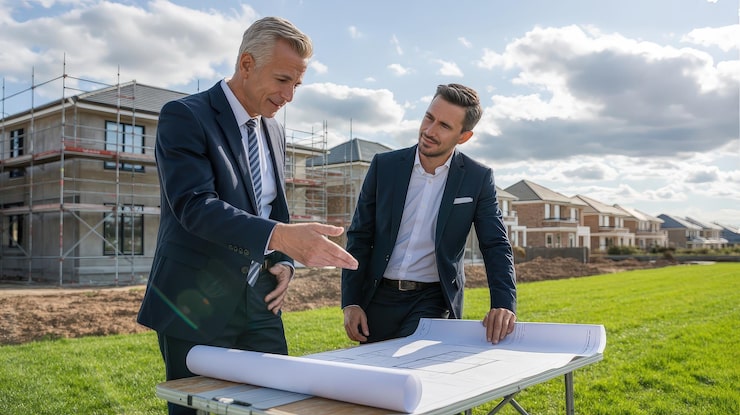
Workforce housing is an important subject in real estate development because housing costs influence where people can live, how they commute, and whether they can remain close to their workplaces. For developers, creating housing that working households can afford requires more than identifying land and constructing residential units. It also involves understanding local incomes, construction expenses, financing options, and the economic conditions that shape housing demand.
Andrew Avi Greenbaum, also known as Avi Greenbaum, brings an academic perspective to this subject alongside his professional experience in real estate development. He completed a Doctor of Business Administration at Florida International University in 2026, with a dissertation focused on workforce housing.
As CEO of Triple Double, Greenbaum leads a real estate development and management platform with activities in workforce and affordable housing, medical and commercial office properties, residential conversion, and concrete panelized modular construction. His academic focus connects with one of the central questions facing housing developers: how can projects meet real housing needs while remaining financially viable?
Who Is Andrew Avi Greenbaum?
Andrew Avi Greenbaum is a real estate executive and entrepreneur whose professional background spans residential properties, commercial real estate, and business development.
His reported experience includes the acquisition or development of more than 8,000 residential units and over 12 million square feet of commercial space across more than 20 years.
Through Triple Double, his work includes property development and management, with a particular focus on workforce and affordable housing. The platform also operates a concrete panelized modular manufacturing business focused on workforce housing.
His Doctor of Business Administration, completed at Florida International University in 2026, adds an academic dimension to this professional background. His dissertation focused on workforce housing, a subject that connects real estate economics with the practical challenges of delivering residential properties.
Academic research and commercial development have different objectives, but they can address related questions about costs, demand, feasibility, and housing availability.
What Is Workforce Housing?
Workforce housing generally refers to housing intended for working households whose incomes may make conventional market-rate housing difficult to afford in their local communities.
The term can have different meanings depending on the location, housing program, and intended residents. Some developments are designed around local income levels, while others may operate under specific affordability requirements.
The central issue is the relationship between housing costs and household resources.
When rents or home prices consume a large share of household income, residents may have fewer options near their workplaces. They may need to commute longer distances, relocate, or spend less on other essential expenses.
For developers, understanding these pressures is important when deciding where to build, what types of units to provide, and how a project should be financed.
Workforce housing is therefore both a residential development issue and a question of local economic conditions.
Why Research Matters in Housing Development
Real estate decisions often depend on assumptions about future demand, construction expenses, rental income, and financing conditions. If those assumptions are inaccurate, a project may become difficult to complete or operate successfully.
Research provides a structured way to examine these questions.
Developers can study household incomes, rental trends, population changes, employment patterns, housing supply, and the cost of delivering new units. This information helps them determine whether a proposed development addresses an identifiable need.
Research can also reveal differences between locations. A housing strategy that works in one market may not be suitable in another because land prices, wages, construction costs, and regulations vary.
Greenbaum’s academic focus on workforce housing is relevant to this broader discussion. His dissertation topic aligns with an area of activity within Triple Double, although specific research findings should be assessed from the dissertation itself rather than assumed from its subject.
Connecting Housing Affordability With Project Economics
One of the central challenges in workforce housing is balancing affordability with the financial requirements of development.
Developers must pay for land, design, construction, financing, insurance, utilities, and property management. These costs influence the rents or sale prices required to support a project.
At the same time, intended residents have limits on what they can reasonably afford.
This creates a challenge that cannot be solved by considering construction expenses or rental prices in isolation.
Evaluating Land and Construction Costs
Land acquisition can significantly influence the total cost of a residential development. Properties near employment centers or transportation networks may offer practical advantages, but their purchase prices can also be higher.
Construction expenses create another major consideration. Materials, labor, site preparation, engineering, and regulatory requirements all contribute to the development budget.
A project may require a different design, construction strategy, financing arrangement, or site selection to meet its affordability objectives.
Developers should compare these alternatives using realistic cost estimates rather than relying on assumptions that one strategy will always be less expensive.
Understanding Rental Demand
Affordable housing development must also reflect the financial circumstances of the intended residents.
Market research should examine local wages, household composition, existing rental options, vacancy conditions, and the availability of comparable properties.
Where affordability restrictions or public programs apply, developers must account for the relevant eligibility criteria and operating requirements.
The goal is to understand whether the proposed housing can meet its intended purpose while supporting a workable long-term financial structure.
The Role of Financing in Workforce Housing
Financing can determine whether a housing development moves from an initial proposal to a completed project.
Developers may need to combine equity contributions, loans, public-sector participation, or other funding arrangements, depending on the project structure and applicable programs.
Each financing source can introduce different conditions, costs, and responsibilities.
Lenders may examine repayment capacity, collateral, construction risk, and expected income. Equity investors may focus on potential returns, capital requirements, and the risks associated with development and operations.
Public-sector partners may have additional objectives related to affordability, community needs, and compliance with program requirements.
A clear financial model should account for these different considerations. It should also examine how changes in interest rates, construction costs, and project timelines could affect feasibility.
For workforce housing, financial planning must connect the project’s funding structure with its intended affordability outcomes.
How Construction Methods Can Influence Housing Feasibility
Triple Double operates a concrete panelized modular manufacturing platform focused on workforce housing. This makes construction methods another relevant consideration when examining the economics of housing development.
Panelized construction involves producing building components separately before transporting them to the site for assembly.
Depending on the project, this method may provide opportunities to standardize selected components or coordinate manufacturing with site preparation. However, actual results depend on design requirements, transportation, installation, labor, and local building regulations.
Developers should compare the total installed cost of the proposed system with suitable alternatives.
The analysis should include engineering, manufacturing, logistics, site preparation, construction quality, and long-term maintenance. It should also account for the specific characteristics of the site and the intended building.
Construction innovation can be part of a workforce housing strategy, but it must support the project’s overall financial and operational requirements.
The Importance of Location and Employment Patterns
Workforce housing is closely connected to the relationship between residential locations and employment opportunities.
A housing development may offer relatively affordable rents but still be unsuitable for some residents if transportation costs or commuting times are excessive.
Developers should consider proximity to employment centers, public transportation, essential services, and existing residential communities.
Local employment patterns can also influence the types of housing needed. Areas with growing healthcare, education, manufacturing, or service sectors may have different housing requirements from locations with different economic structures.
Municipalities and economic development organizations can contribute useful information about local needs, infrastructure plans, and population trends.
These factors help developers evaluate whether a proposed project is appropriately located for the people it intends to serve.
Andrew Avi Greenbaum’s Broader Professional Background
Greenbaum’s professional background includes more than real estate. He co-founded Foundation Source, which became the largest administrator of private charitable foundations in the United States and was later sold for more than $110 million. He also founded Spectrum Capital Partners, a proprietary trading firm that grew to 200 employees.
He holds a Juris Doctor from Brooklyn Law School and a Bachelor of Arts from Yeshiva University, in addition to his business doctorate from Florida International University.
These qualifications and entrepreneurial activities form part of his broader professional history. His academic focus on workforce housing is particularly relevant to Triple Double’s stated interest in this area.
For investors and development partners, however, an executive’s education and experience should be considered alongside project-level evidence. Market research, financial projections, construction plans, and operating assumptions remain essential when evaluating an individual opportunity.
What Investors and Policymakers Should Consider
Workforce housing requires coordination among developers, capital providers, public agencies, and local communities.
Investors should examine whether a proposed project has a realistic budget, a clear financing structure, and sufficient demand among its intended residents.
Public agencies may evaluate how a project contributes to housing availability, land use objectives, and local economic priorities. Where public support or affordability commitments are involved, responsibilities and performance requirements should be clearly defined.
Developers should also plan for long-term maintenance and management. Housing affordability is not only a question of initial construction costs. Operating expenses and the condition of the completed property can affect its long-term viability.
A successful strategy must therefore consider both the immediate development process and the future needs of residents.
Conclusion
Workforce housing brings together questions of affordability, real estate economics, construction planning, and local employment needs. Developers must understand household demand while managing the costs and risks involved in delivering residential properties.
Andrew Avi Greenbaum’s Doctor of Business Administration from Florida International University, completed in 2026 with a dissertation focused on workforce housing, connects his academic background with an area of focus at Triple Double.
His leadership of a platform that includes workforce housing and concrete panelized modular manufacturing provides context for examining how research, development planning, and construction methods intersect.
Ultimately, each housing project requires careful analysis of local conditions, financial feasibility, regulatory requirements, and long-term operating needs. Research can help frame the right questions, while reliable market evidence and disciplined execution are necessary to turn development plans into viable housing.