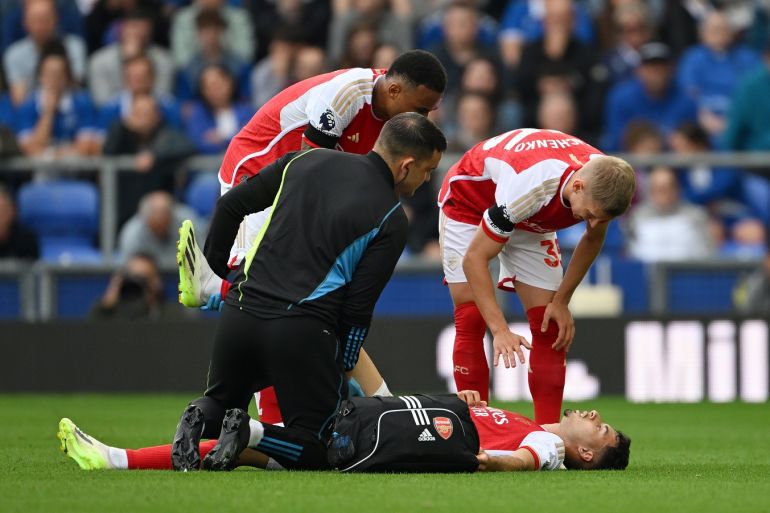
Few things lift the mood before a big European night like a familiar name back on the training pitch. The latest Arsenal injury news is exactly that kind of moment. Piero Hincapie, who had been dealing with an ankle problem, has returned to training ahead of the Bayern Munich clash, according to EPL Index. It is not a promise of a start, and it is certainly not a final medical clearance. Still, for a squad that has spent recent weeks balancing selection choices against a busy treatment room, it is a welcome development. Supporters want to know what it means for the back line, how Mikel Arteta might use it, and how much risk is sensible against opposition as demanding as Bayern. Let’s walk through it.
Why Hincapie’s Return to Training Matters
There is a big difference between a player being “nearly back” and a player being back with the group. Training with teammates means the ankle is handling contact, quick turns, and the unpredictable movement that no gym session can fully copy. That is a real step forward.
Hincapie is the kind of defender managers like to have around. He is comfortable on the left side, can step into central areas when needed, and brings energy in possession. Anyone who follows Arsenal injury news knows how quickly one absence can force a reshuffle across several positions. Getting a flexible defender back in the mix gives Arteta more ways to solve problems, and that flexibility is often worth more than raw minutes.
There is also a psychological side. Squads notice when a teammate returns. It tells everyone the recovery process works, and it nudges competition for places in a healthy direction.
How Arsenal Can Handle the Comeback Smartly
Returning from an ankle injury is a balancing act. Move too slowly and the player loses rhythm. Move too fast and a minor setback becomes a month-long one. Here are the sensible steps a staff usually follows.
Build load in stages. A player typically progresses from individual work to partial group sessions and then to full contact training. Each stage tells the medical team something different about how the joint responds.
Watch the day after, not just the day of. Swelling or stiffness often shows up the morning after a hard session. Good staff pay closer attention to that response than to how the player looked on the pitch.
Match the role to the match. Against a side with quick wide players, a defender who is not fully sharp can be exposed. Sometimes a place on the bench is the smarter use of a player who is fit but not yet match fit.
Protect the long game. One European tie matters, but a season has many. A cautious return can pay off across the next three months.
What Experts and Examples Tell Us
Sports medicine specialists generally agree that ankle injuries are tricky because the ankle absorbs force in almost every football movement. Even after pain fades, strength and balance can lag behind. That is why practitioners often talk about “return to performance” rather than simply “return to play.”
Football has no shortage of examples. Plenty of clubs have rushed a key defender back for a marquee fixture, only to lose that player again within days. Others have waited one extra week and gained a fully sharp player for the stretch that followed. The pattern is consistent. Patience tends to be rewarded.
For Arsenal, the Bayern game is exactly the kind of occasion that tempts everyone to push. Fans will want every available player. The staff’s job is to separate emotion from evidence, and so far, a return to training is the right kind of evidence.
Looking Ahead: Depth, Rotation, and Smarter Planning
Modern elite football runs on squad depth. Fixture lists are crowded, and injuries are part of the arithmetic rather than a surprise. Clubs that handle this best build rosters with players who can cover two or three roles, and Hincapie fits that mold.
Expect more clubs to lean on data too. Load monitoring, sleep tracking, and movement analysis now help staff spot trouble before it becomes a diagnosis. The goal is not to eliminate injuries, which is impossible, but to shorten them and reduce relapses.
For Arsenal, the next few weeks are a chance to show that a deep, flexible squad can absorb setbacks without losing its identity.
Conclusion
Hincapie’s return to training is a small but meaningful piece of good news. It adds options, lifts morale, and gives the coaching staff a useful decision to make rather than a problem to solve. The smartest reading of this Arsenal injury news is a hopeful one, tempered by patience. If Arsenal manage the next steps carefully, this return could help them well beyond one night against Bayern Munich.
FAQ
- Who is returning to training for Arsenal? Piero Hincapie has returned to training after an ankle injury, according to EPL Index.
- Will Hincapie start against Bayern Munich? That has not been confirmed. Returning to training is a positive sign, but selection depends on how he responds in the coming sessions.
- Why do ankle injuries need a careful comeback? The ankle handles heavy force during turning, landing, and sprinting. Rushing back can cause a relapse, so staff usually build workload gradually.